
July 23, 2026
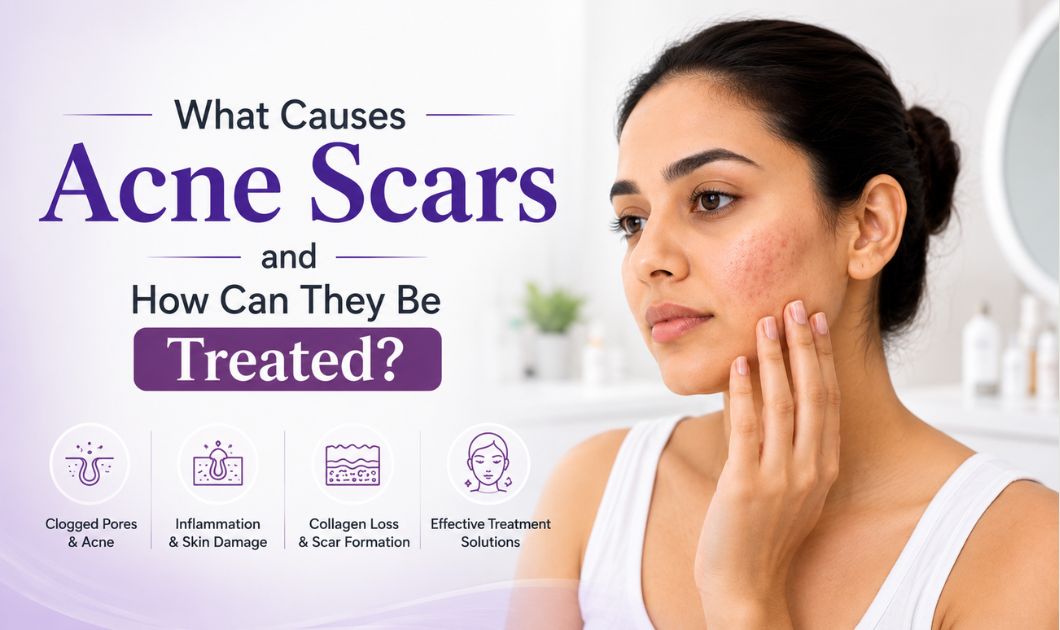
What Causes Acne Scars and How Can They Be Treated?
Acne scars form when inflammation from a breakout damages the deeper layers of skin as it heals. They show up as small dents, uneven texture, or raised patches. Which acne scars treatment works for you comes down to the type of scar, how deep it goes, and the condition of your skin. Procedures like CO2 laser and microneedling can smooth texture and soften the look of scars, but only when a dermatologist plans and performs them.
Acne itself is common. The scars it leaves are the part that lingers, often long after the last breakout has cleared. For a lot of people it’s the uneven texture, the visible pits, or the way the skin just looks different that chips away at their confidence. Knowing how these scars form, and what actually helps, makes it easier to decide what to do about them.
What Causes Acne Scars?
Scars form because the skin gets damaged while it repairs itself after a breakout. When a pimple becomes inflamed, that inflammation reaches the collagen and tissue underneath. Collagen is what keeps skin firm and smooth, so when the body lays down too little or too much of it during repair, you’re left with a scar.
A few things push up the odds of scarring: severe or frequent acne, breakouts left untreated too long, and the habit almost everyone is guilty of, picking and squeezing. Popping a spot yourself adds inflammation to an already inflamed area, and that’s often what tips it into a scar.
Genetics and skin type matter too. It’s why two people with roughly the same acne can end up with very different skin once it all settles.
What Are the Different Types of Acne Scars?
Not all acne scars look alike, and the kind you have decides which acne scar treatment makes sense for you.
Ice pick scars are narrow and deep, almost like tiny puncture holes in the skin. Because they reach so far down, they usually need targeted treatment.
Boxcar scars are wider, with sharp, defined edges. They tend to sit on the cheeks and leave the surface looking pitted.
Rolling scars give the skin a soft, wave-like unevenness. They come from tissue under the surface pulling the skin down, so the roll is really a dip.
Raised acne scars are the opposite. Instead of sinking in, they sit above the skin because the body made too much collagen while healing. These often need a different, more specialised approach.
One more distinction worth knowing: acne marks aren’t the same as acne scars. Marks are the temporary discolouration left after a spot heals; scars are an actual change in the skin’s structure. The two are treated very differently.
Can Acne Scars Be Permanently Removed?
This is the question almost everyone asks first: can they be removed for good? The real answer depends on the type of scar, how deep it runs, and how severe it is. Full removal isn’t always realistic, but professional acne scar treatments can make a real difference to texture and to how noticeable the scars are.
Most treatments work toward the same goal: rebuilding collagen, resurfacing the uneven areas, and leaving the skin smoother than it was. A dermatologist looks at your scars, your skin, and your general health before suggesting anything.
CO2 laser resurfacing and microneedling have become go-to options because they lean on the skin’s own healing rather than fighting it. Results still differ from one person to the next, which is why it helps to go in with realistic expectations.
CO2 Laser for Acne Scars: How It Works?
CO2 laser for acne scars is a resurfacing treatment that uses precise beams of laser energy to work on damaged texture. It removes microscopic columns of scarred skin and, at the same time, prompts the deeper layers to build fresh collagen.
As that new collagen comes in, the skin evens out and smooths over gradually. This isn’t an overnight change. Fractional CO2 laser is usually the choice for deeper scars and stubborn texture that other approaches haven’t touched.
It’s always done by a trained professional, and only after they’ve looked at your skin type and the state of your scars. Afterward, some redness, swelling, or mild soreness is normal, though how long it lasts depends on your skin.
For scars that have been dragging down your skin’s texture for years, CO2 laser is often one of the more effective options available.
Microneedling for Acne Scars Explained
Microneedling for acne scars works on a simple idea. Fine needles create tiny, controlled injuries, and the skin responds by repairing itself, building new collagen and elastin as it does.
As that collagen builds up, mild to moderate scars and general unevenness tend to soften over time. People often choose microneedling when they want results without much downtime, since it’s gentler than heavier resurfacing procedures.
How many sessions you’ll need comes down to how deep the scars are and how your skin responds. A dermatologist can tell you whether microneedling on its own is enough, or whether pairing it with something else would work better.
One thing worth being firm about: microneedling belongs in a clinic. The at-home roller devices don’t come close to safety, hygiene, or results.
CO2 Laser vs Microneedling: Which Treatment Is Better for Acne Scars?
There’s no single winner here. The better treatment is whichever one fits your skin, not whichever one sounds more advanced.
CO2 laser tends to be the call for deeper scars and heavier texture problems, since it’s built around resurfacing and rebuilding collagen. Microneedling suits milder, moderate scarring, nudging the skin to produce collagen on its own.
And it isn’t always one or the other. Dermatologists often mix procedures when someone has a few different scar types at once. A plan built around your own skin will always beat one you pieced together from articles online, this one included.
How Long Does Acne Scar Treatment Take?
How long the whole thing takes depends on the procedure and where your skin is starting from. Most treatments need several sessions, usually a few weeks apart, so the skin has time to heal and lay down new collagen in between.
Results build slowly because collagen remodelling isn’t fast, and there’s no rushing it. Sticking to a sensible skincare routine and following your aftercare instructions goes a long way in the meantime.
At a consultation, your dermatologist can walk you through the likely timeline, how many sessions to expect, and what aftercare looks like for your skin specifically.
Why Choose a Professional Acne Scar Treatment Clinic in Surat?
Where you get treated matters as much as which treatment you pick. A proper dermatology clinic assesses your skin and recommends based on your scar type, instead of running everyone through the same procedure.
Treatments like CO2 laser and microneedling only work out well when the person doing them has the training, the right equipment, and the patience to assess carefully first. That’s what keeps them both safe and effective.
If you’re looking into acne scar treatment in Surat, sitting down with an experienced dermatology and aesthetic clinic is the easiest way to understand your options and settle on a plan that fits your skin rather than someone else’s.
Conclusion
Acne scars aren’t just a surface problem. They come from real changes deep in the skin as it heals, which is exactly why figuring out your scar type comes first. From there, options like CO2 laser and microneedling can improve texture and soften scars, as long as they’re done under proper professional care.
Glamour Skin Studio is a dermatology, aesthetic, and laser clinic in Surat that builds acne scars treatment around the individual rather than a fixed menu. The focus is on assessing your skin properly and matching it to the right procedure, so you’re working toward clearer, smoother skin instead of guessing at it.
FAQs
1. What is the best treatment for acne scars?
It depends on the type and depth of your scars, so there’s no universal “best.” After examining your skin, a dermatologist might suggest CO2 laser, microneedling, or a combination of the two.
2. Can acne scars be completely removed?
Professional treatments can improve them a great deal, but complete removal isn’t guaranteed. How far you can get depends on the scar type, how severe it is, and how your skin responds.
3. How many sessions are needed for acne scar treatment?
That varies with the treatment and the state of your scars. A dermatologist can give you a realistic number once they’ve examined your skin.
4. Is CO2 laser treatment safe for acne scars?
CO2 laser is a well-established procedure for acne scars and texture. Whether it’s right for you comes down to your skin type and concerns, which a dermatologist can assess.